
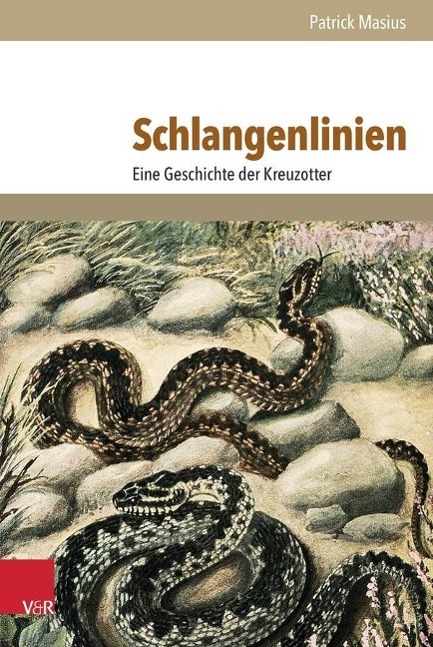
Schlangenlinien
55,00 €
Alle Preisangaben inkl. MwSt. · zzgl. Versandkosten
✓ Auf Lager · Sofort lieferbar · Lieferung 2–5 Werktage
Artikelnummer: 9783525317143 · Kategorien: Bücher, Politik & Geschichte
Beschreibung
'Most animals carry certain meanings framed by our cultural understanding. They are characterized in terms of usefulness, beauty, behavior etc. In the history of the only poisonous snake in Germany a significant change of perception can be shown. The Common Viper, first identified by zoologists in the 18th century became feared as a deadly monster. From 1900 onwards even state eradication programs were launched. With the rise of nature conservation, ideas about this snake slowly started to change. National persecution was officially stopped in 1930 and even aesthetic aspects were discovered. By the 1970s the Viper was not perceived as dangerous anymore but on the contrary as an endangered species. Explaining the way of how the cultural meaning in history developed, reveals fundamental aspects of where this meaning depends on. The answer lies not so much in a progression of knowledge, but more so in changing relations to the environment, materially and ideologically.; Most animals carry certain meanings framed by our cultural understanding. They are characterized in terms of usefulness, beauty, behavior etc. In the history of the only poisonous snake in Germany a significant change of perception can be shown. The Common Viper, first identified by zoologists in the 18th century became feared as a deadly monster. From 1900 onwards even state eradication programs were launched. With the rise of nature conservation, ideas about this snake slowly started to change. National persecution was officially stopped in 1930 and even aesthetic aspects were discovered. By the 1970s the Viper was not perceived as dangerous anymore but - on the contrary - as an endangered species. Explaining the way of how the cultural meaning in history developed, reveals fundamental aspects of where this meaning depends on. The answer lies not so much in a progression of knowledge, but more so in changing relations to the environment, materially and ideologically.
Vom Heimatdichter Hermann Löns noch als 'Ungetüm mit den roten Mörderaugen' charakterisiert, erfreut sich die Kreuzotter heute der Anerkennung als seltene und erhaltenswerte Art.
Während die Kreuzotter noch Anfang des 19. Jahrhunderts kaum erkundet war, gingen mit ihrer wissenschaftlichen Erforschung Ausrottungsideen einher. Mit den aufkommenden Naturschutzidealen änderte sich die Einstellung zu dieser Schlange im 20. Jahrhundert grundlegend. Sie wurde rehabilitiert, bis sie sogar einen gesetzlichen Schutzstatus erhielt. Dass die Fortschritte der Natur- und Umweltschutzbewegung die gesellschaftlichen Beziehungen zur Umwelt neu definiert haben, belegt Patrick Masius am Beispiel der Geschichte der Kreuzotter eindringlich.Vom Heimatdichter Hermann Löns noch als »Ungetüm mit den roten Mörderaugen« charakterisiert, erfreut sich die Kreuzotter heute der Anerkennung als seltene und erhaltenswerte Art.
Produktdetails
| Untertitel | Eine Geschichte der Kreuzotter |
| ISBN-13 | 9783525317143 |
| Verlag | Vandenhoeck & Ruprecht |
| Seiten | 200 |
| Erschienen | 2014 |
| Gewicht | 460 g |
| Maße | 237 x 160 x 17 mm |
Rezensionen
Noch keine Bewertungen. Sei der Erste!
Bewertung schreiben
Um eine Bewertung zu schreiben, musst du eingeloggt sein und das Produkt gekauft haben.
Jetzt einloggen